The plan to bring beavers, eagles and crystal-clear rivers to Reading

REVEALED: The bold strategy to transform wildlife in Berkshire... and how you can help

Today we look inside the ambitious new action plan to rewild Berkshire – and the battle to make it real. Could wildflower meadows, wetlands and soaring birds of prey soon reshape Reading? And are you ready to help make it happen?

Imagine a chalk stream at the height of an English summer. Its banks are lined thick with reeds and trees. Dappled sunlight lands on the crystal-clear waters. The surface ripples from a flash of blue – a kingfisher catching a snack. You bend then drink a cupped handful of cool, fresh water.

This, would you believe, is the River Kennet in south Reading.

Now imagine a field of long, flowing grasses, green and gold blowing in the breeze, flecked with a kaleidoscope of colourful wildflowers. There is an extraordinary, constant buzzing from the huge number of insects in the grass.

This is a field in west Reading.

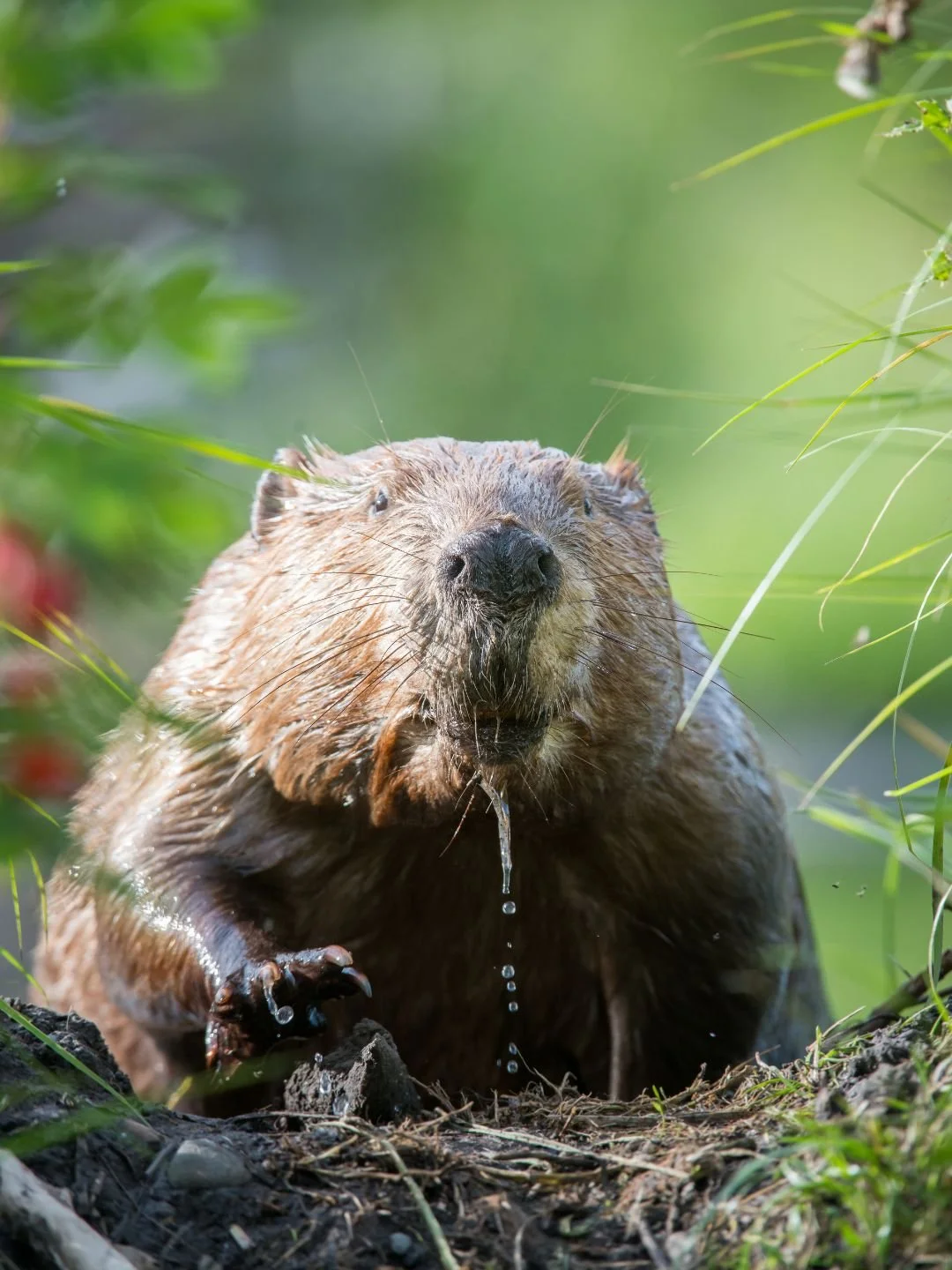
Finally, imagine a riverbank. You think you spot a dog, but it’s not – it’s a rodent, about a metre long, gnawing on willow bark. Its brown fur glistens damp, and its large, flat tail slaps the water.

This is a beaver in the Thames, just outside of Reading.

And this is all the vision painted by Rosie Street, the co-author of Berkshire’s Local Nature Recovery Strategy (LNRS) – a plan to restore the county’s remarkable natural biodiversity, and one branch of a national effort to rewild parts of England.

Beavers could live once again in and near Reading, if the Berkshire Local Nature Recovery Strategy works. 

You struggled to imagine all of that in Reading, right?

There’s a reason why we can’t imagine it, though Street says it is all very possible. It’s the “shifting baselines phenomenon” – in plain English, that means we have lost so much of the flora and fauna native to Reading over the past few hundred years that we now can’t imagine such creatures and habitats existing here.

Once upon a time they did, and Street wants us to realise that nature can thrive here once again – and inspire us to get off our backsides and make it happen.

The strategy took 31 months of the Berkshire LNRS team working with local experts, landowners, public bodies and residents to establish a collective aim for nature recovery. Street insists the aim is “realistic change in the environment”.

Change is required.

“England is one of the most nature-depleted countries in the world,” says Street. “This is tragic considering we have lots of jobs in the conservation sector. Something isn’t working.

“We’ve lost a third of our species’ abundance since 1970, and we have such fragmented habitats. We’ve lost a huge amount of hedgerows, an incredible amount of ancient woodland.”

The main threats to wildlife, says the most recent State of Nature report in 2023, are “significant changes in land management, particularly for agriculture, and climate change”.

Locally, “Reading is an incredibly urban area and doesn’t contain a huge number of habitats,” says Street. “These are fragmented pockets and parks.”

But it’s not all bad news.

“In Berkshire we have a really exciting plethora of biodiversity.

“We have some of the best examples of ancient oak trees left, and beetles and bugs that you don’t find anywhere else in the whole world.

“We have something like 5% of the world’s chalk streams, such as the Pang and the Kennet, which hold plants and animals you won’t get anywhere else. The chalk bedrock makes them unique and beautiful places, with really clear water.

“Unfortunately, the Kennet is the most polluted chalk stream in Berkshire, but it does have the underlying bedrock that could make it again an incredible habitat.”

The local habitat maps produced by Berkshire’s LNRS team offer a tantalising glimpse of what might be possible in and around Reading.

A thick golden trail indicates the grassland that could be restored all the way along the Thames through Reading, with Calcot, Southcote, Englefield, Burghfield, and Sindlesham all potential areas for such restoration.

Woodley, Sulham and Spencers Wood could all become havens for riots of coloured wildflowers.

Wet woodland could flourish in great swathes along the Kennet, from Whitley through Theale, Lower Padworth and Aldermaston, all the way to Thatcham.

Fens could return near Southcote, and run from Sindlesham to Swallowfield Park.

Great ponds could dot the Thames stretching out from Caversham.

Those crystal-clear chalk streams could flow through Pangbourne, Stanford Dingley, Whitley, Coley and even through central Reading.

“The map is among the most exciting parts of the strategy,” says Street. It is the first time that practical actions have been mapped on such a local level. The framework, funding and legal foundation for the project comes from the Department for Environment, Food and Rural Affairs (DEFRA).

The LNRS map showing areas identified where grassland could be restored in Berkshire to help wildlife flourish near Reading. 

If those opportunities identified on the maps are taken, we might begin to see those fantastical environments taking shape, with richer, more fertile habitats becoming populated with higher numbers and types of wild animals. Creatures you’d never imagined seeing would start to live on your doorstep as the shifting baselines effect reverses.

“We’re used to seeing a few squirrels around, some foxes, some birds, a number of insects, a few bumblebees buzzing, but we could see such huge numbers and more types of animal than we’re ever used to,” says Street. “It would be unimaginably exciting.”

A list of priority species is identified in the strategy, including creatures rarely and sometimes never found in Berkshire, but which could all thrive here if action is taken. They include pine marten, glow worms and crayfish – “but people do like beavers,” she laughs.

Eurasian beavers have not lived in the UK for around 400 years – they are native but were hunted to extinction, for their fur, meat and pungent scent glands. A reintroduction scheme began in Scotland in 2021 and there is now a population of around 2,000, while the first beavers in England were released in Dorset last May.

There are good reasons for beavers to return. Beaver dams create blockages in river flow, spilling water out to create huge ponds and marshes – i.e. natural floodplains upstream of large towns and cities like Reading.

“We could definitely have beavers back in Berkshire – they’re already in Bristol, they could work their way up the Kennet,” says Street. A reader told the Guardian in December that he had captured footage of beavers in Thatcham, so it’s possible some have already migrated to Reading’s borders.

The key is to work with landowners and farmers to make sure beavers are located in the most practical spots, where the natural floodplain they create has the highest benefit for neighbouring urban areas.

“They allow rivers to move naturally,” says Street. “The water would have space to steadily filter back into the land. The straight, canalised rivers we currently have flow the water straight into our urban areas, which is a massive problem.”

If the thought of beavers near Reading was strange enough, get this: how about the most iconic bird of prey, one with a wingspan over two metres, living here for the first time in over 100 years? If you’re a red kite reading this, look away now, because the white-tailed eagle might soon rule the roost once again.

“Wet woodland has been massively lost because it’s been drained for agriculture – we’ve created channels to get water out, then that woodland might be deforested and grazed or have crops grown on. Restoration could be huge in Reading, because Berkshire is a really wet area.

“There are white-tailed eagles back in Poole (and the Isle of Wight), which is something we’d never have thought. We have storks nesting again at the Knepp Estate in West Sussex. We have ample opportunities in Berkshire to have these creatures too, if they had a bit more habitat around.”

It is an almost hallucinatory dream. But the question remains: how on God’s green earth – or on Reading’s grey streets – can this become reality?

“Every county is working on how to prioritise the actions in the LNRS,” says Street, “because there’s not enough money to fund all the projects.”

Ah. Don’t rush out to buy your eagle feed from Costco just yet, because that feels rather a large problem.

But Street has an answer: “It’s more about coordination.”

DEFRA appointed Windsor and Maidenhead as the local authority responsible for compiling and delivering Berkshire’s LNRS. Street co-authored the strategy, and her successor, Alistair Will, will work with Bracknell Forest, Reading, Slough, West Berkshire and Wokingham councils, plus Natural England (the government’s nature regulator), to “ensure investment and effort go where they will make the greatest difference”.

There are four actions to achieve this: engage people with the strategy; work with planning officers to ensure the LNRS “holds weight” in development decisions; link people with an idea for a nature recovery project to access the grants available; and monitor progress.

The first of those seems achievable, because Street is a brilliant, passionate advocate for local nature recovery. The other three require closer scrutiny.

On planning, Street is bullish.

“One of the biggest successes of the LNRS is its links with planning policy. The people in councils who decide where new houses and developments go legally have to take account of the LNRS.

“It doesn’t mean they can’t build where we’ve identified opportunity areas, but it needs to be justified why they are continuing to build there – and that does have weight.

“There is less chance of development in prime nature recovery areas, and that is vital in places like Reading.”

But how much weight? That’s more uncertain. “It’s up to planning policy officers. They make the ultimate decision, and they have lots of things to take into account, like flooding areas, sustainability measures, huge pressures on house building. But it’s definitely something in the right direction.”

The government has pledged to build 1.5million homes by the end of this parliament and the Prime Minister said he will “back the builders, not the blockers” as a cornerstone of his growth plan. Local sources have suggested that is likely to outweigh the LNRS in planning considerations.

Swarms of angry conservationists will surely make life miserable for pro-construction politicians, however.

To link people with conservation cash, Street and the LNRS will guide how developers meet Biodiversity Net Gain obligations, help farmers access funding for nature-friendly practices, and encourage local projects that tackle climate change and boost biodiversity.

These objectives are clear enough – but the mechanisms for delivery are still taking shape. They centre around connecting people with private finance through networking events and potentially an online platform.

Emerging since 2024 is the Biodiversity Net Gain (BNG) market, which provides tangible financial incentives to landowners who are able to create habitats. These are registered as “biodiversity units” to sell to developers who are unable to deliver habitat improvements on their own sites. By law, developers must now deliver a biodiversity gain of at least 10% above the pre-development baseline.

There is also a BNG market premium available to landowners who implement the biodiversity measures specifically identified in the LNRS. This raises a BNG unit’s value by 15%.

It is, appropriately, a rabbit hole. BNG units are worth different amounts depending on their geographical location, and are defined by the size of an area but also by both the richness of, and the uplift to, its biodiversity from the previous base level.

“It’s definitely not perfect,” says Street, “but it’s exciting to put economics into nature conservation – and the government is hoping to link more of these incentives into the LNRS. That’s really what’s going to make it happen.”

Street hopes to “reinvigorate” the Local Nature Partnership in Berkshire – “it has been underfunded for a few years” – to fuel the delivery of the LNRS. It contains a group of experts from different institutions, including the University of Reading, conservation charities, the National Farmers Union, Thames Water, and also the Englefield Estate – one of the largest landowners in the county.

But the complex web of land ownership in England causes further practical problems in the allocation of any available public money for nature recovery.

In Berkshire, most land is agricultural, with woodland and urban areas forming much smaller proportions.

A disparate and diffuse array of individual landowners, family estates, corporate farms and investment funds own the majority of rural land in the county, with various public bodies still holding an appreciable share. Significant pockets of land are also held by charities and trusts, while utilities and corporations own infrastructure such as rivers and reservoirs.

Each might have competing intentions for their land. Even if a landowner’s focus is on nature recovery, identifying and enabling them is a formidable task.

“Landowners and farmers are finding it hard to do the right things for nature because of the level of knowledge and expertise needed in accessing some of these grants – and that is a barrier,” says Street. “The idea is to make it a bit more collective, like the collective solar panel projects.”

It is easy to doubt whether the LNRS will succeed, particularly in a time of economic uncertainty and a tight public purse. The evidence of the last half a century suggests the continuing destruction of our natural world as human need is prioritised – despite what headlines about bat tunnels and fish discos suggest.

The sobering truth, Street admits, is that “we can’t make any individual accountable for a collective action across Berkshire, because land is owned by all different people”.

As for monitoring progress, things are even more stark. “I don’t know how it’s going to happen. We’re limited without resources to map these things.”

But there are two shining beacons to sustain real hope for nature recovery local to Reading.

The first is that, in the LNRS, there is now a plan. But the second feels even more powerful. It’s the strength of people’s desire to improve biodiversity and nature recovery in their local streets and parks; and more importantly, it’s their desire to grab the initiative and make this happen.

“There are some great groups in Reading,” says Street. “I worked with some really passionate individuals who’ve made corridors across Reading for wildlife to cross, and who work really hard in specific parks. They’re an impressive coalition of people and biodiversity working to make realistic change in the environment.”

We can see this in the wildlife corridors of Loddon and Lower Earley, along the Thames from Sonning to Bulmershe, the branches to King’s Meadow and the Kennet, and more.

The Loddon and Lower Earley Green Corridor as created by the Earley Environmental Group, part of the Earley Green Corridor Network. From the LNRS.

We can also see it in Woodley, where in November the Dinton Wednesday Conservation Volunteers braved rain and snow to clear brambles and overgrown trees in the Highwood Nature Reserve, so sunlight can reach the ground and encourage growth of new heather. This restores the heathland needed for encouraging biodiversity and combating climate change by locking in carbon.

We can see it again in the work of Nature Nurture, a Community Interest Company that has transformed several areas of Reading. The Holy Brook Nook went from a litter-ridden wasteland with more drug addicts than wildlife to a community garden full of birds, flourishing trees and public art, through a combination of vision, passion, hard work, and finance from Reading Council and the National Lottery. Rosie’s recipe for nature recovery really does work when all the ingredients are available.

If you have the passion too, yet don’t know where to start, she has a tip.

“Ask yourself: is there a specific animal or plant you’ve seen in the strategy that you want to protect? Then think: what are the places on the LNRS map that these species might like to live? It’s little collective acts of goodness that add up to a lot of power and a lot of action.

“We all have more power than we think we do.”

Previous
Previous

The reinvention of DJ Rap

Next
Next

Is Reading really "over the hill"?