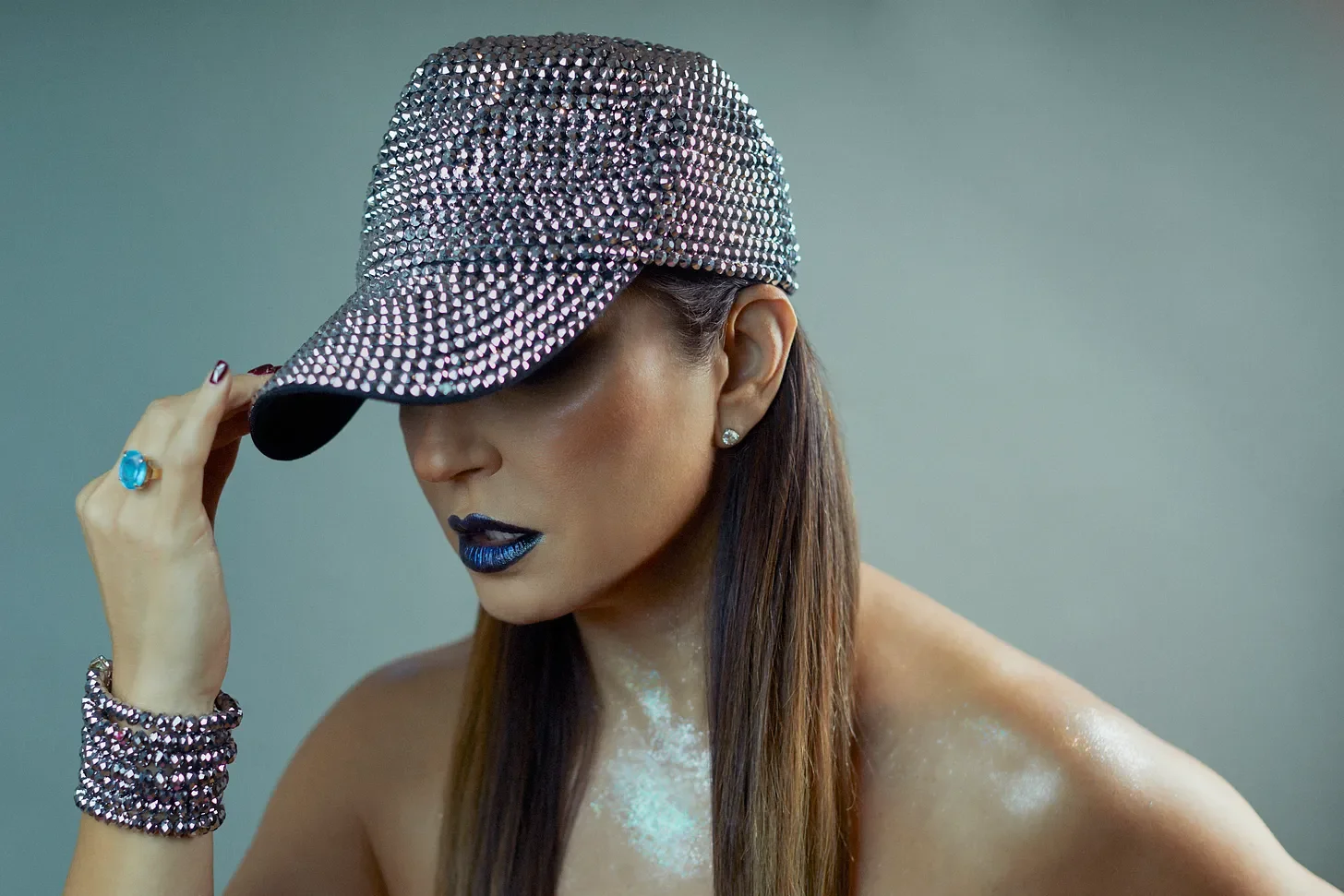
The reinvention of DJ Rap

She defined jungle, cracked America, but lost everything – then started again in Reading

From a lost 14-year-old in London’s rave scene to a global drum and bass pioneer, DJ Rap has lived a life of extremes: fame, breakdown and renewal. Now based in Reading, she reveals how it all fell apart in America, and why she chose this town to build it back.

The Queen of Jungle was once a lost 14-year-old girl who found home in a rave – and now she’s built a new one in Reading.

DJ Rap is a dance music pioneer who rewrote the rules for female DJs and enjoyed success that launched her to Hollywood.

Then she lost everything.

Here, she rebuilt it.

DJ Rap is the jungle pioneer and international artist who has made a home in Reading after leaving a turbulent life in the United States. Picture: DJ Rap

“I think to myself: I’m just lucky,” she says. “There are lots of people that would love to have my career. But that doesn’t mean I don’t work my ass off!

“I’m never disappointed, because everything is a blessing. When you’ve lost everything, which I did – in America, I hit rock bottom – to find myself busy as an artist again and in demand and with a full calendar, and this amazing life… when you’re older, you just go: thank you.”

But let’s borrow a tool of her trade, and rewind.

If you’ve never been to a drum and bass rave, that’s when a tune is sending the dancefloor wild and a DJ spins the record right back to the start.

SPIRITUAL AURA

“The best way to say it is that I was a 14-year-old girl that was looking for a home and found it in a rave,” she says. “I saw how it brought people together. Whether you were black or white, it wasn’t about guys hitting on you, it wasn’t about girls beating you up. It was just this whole love and energy and mixed races that I’d never seen before. I felt like I’d found my religion in a rave.”

That was back in 1986, and Charissa Saverio was besotted. Not like her friends at the time though. “Other girls were interested in boys – but I was interested in MIDI!” she laughs.

Born in Singapore and the stepdaughter of a luxury hotel manager, Saverio lived a difficult, nomadic childhood that took her from Greece to Ghana, with plenty more stops in between. She left home aged just 14. With Italian, Malaysian and Irish heritage, she had reason to explore the world – but the darkened rooms of raves and recording studios are where she settled.

“I took jobs in studios, made the coffee, watched and learned. From a very early age, I was interested in production, and when I went to a rave I realised that DJing was what I wanted to do, because I saw how a DJ could bring a whole group of people together. The energy, one person holding tens of thousands of people captivated by music – that’s an incredible thing. And the love they receive back – it’s like the ultimate hug, right?

“It’s probably why so many dysfunctional people become artists. Because we all need that hug! Had I not taken that choice, I would have ended up in a very dark place.”

A talented natural musician, Saverio learned to play the piano as a child via the Suzuki method – first by ear, then later by theory. “But I really couldn’t be arsed to do theory!”

In the late 80s and early 90s, however, no matter her talent or dedication, there was an obstacle to overcome: all the DJs at the big raves were men.

“Understand, in those days, women weren’t allowed to do that. I guess the thing I’m most proud of is that I broke that glass ceiling, and I became the first female DJ to not only get paid the same as the boys, but to play the main stage with them. The moment that happened, I never looked back.”

It might surprise you to know that Saverio thinks she was never held back by sexism.

“People say how sexist it is, but if you think about how long I’ve been working, that can’t really be true because I’m always booked,” she insists. “While sexism exists in every scene, for me it was like the promoters were thinking: ‘Oh my God, this is a novelty! Let’s put her on stage.’”

Maybe that’s true, or maybe it’s because she simply refuses to be a victim. Rap won’t join all-female DJ line-ups because she wants women to “play on an equal footing” with men. One early promoter told her “girls don’t play in this room”. She fought back and proved him wrong.

“I had the talent to back it up – the musical chops,” she says. “And I never relied on just DJing. I made a lot of records that were really successful.”

Divine Rhythm was Rap’s first big rave anthem in 1992. Then in 1994, with Aston, she released one of the defining jungle records – a euphoric, melodic synth hook that drops into a window-shattering bassline: Spiritual Aura. Intelligent Woman was a unique blend of ragga jungle and feminist lyrics.

Rap defines her music as layered: deep, beautiful and trippy – but then it “hits you with bass like a slap round the face with a wet fish”.

Her talent took her all the way to America. Signed by Sony, Rap’s album Learning Curve impressed Columbia Records execs so much that they whisked her across the Atlantic in a multi-million dollar deal.

“They were very focused on breaking electronic stars, but it was myself, Moby, Fatboy Slim – and that was it in America. I worked with incredible people: David Bowie – he loved drum and bass! – Green Day, Seal.”

Not only did they give her a Hollywood makeover, but her album too. The melodic but raw jungle that made her name was swapped for pop-electronica with cross-genre appeal. Suddenly she wasn’t DJing for sweaty dancefloors in East London, but playing with a band for TV audiences in Central Manhattan. Her name wasn’t selling tickets to raves; her image was fronting Twix TV adverts and Calvin Klein billboards. She has sold over three million records.

Rap became a headline DJ in the tech house scene in LA. It didn’t go down well with some of her old fans. Some accused her of selling out underground music. She was subjected to vile abuse. She even received death threats. But it opened up a new career path.

Rap also became a successful songwriter, ghosting for artists including Perry Farrell – the Jane’s Addiction frontman. She helped score movies, including Mission Impossible, Run Lola Run, Rogue Trader and Go – and collaborated with Hans Zimmer. She acted and did theatre.

From the outside, it appeared she had everything. But after her major label deal ended in 2011, she was hit by a “fucking tsunami”.

Rap lost her life savings and her house after one of her agents embezzled the agency.

She had a breakdown. She lost her persona and her identity. DJ Rap ceased to exist.

Cut off from her jungle roots, thousands of miles away in the Californian wilderness, Charissa was lost again. She had left abusive parents aged only 14, then lived in squats and as a young raver regularly took acid, which she says helped heal and inspire her. But now her past trauma had finally caught up. A long road of “self-recovery and discovery” lay ahead.

LEARNING CURVE

Mulholland Drive isn’t known as the road to Reading, but it’s what brought Rap here.

There were other parts of the journey to make first. Therapy. Sobriety. Faith. No music for several years, then a way back in through teaching musical production. It lit a fire. She headed back to raves, not as Rap but as Charissa. Not behind the decks, but on the dancefloor. Not for money, but for love.

Old friends encouraged her to return – Fabio, Jumpin Jack Frost, DJ Hype and others – and after 22 years in America, she flew back to the UK, found an agent, wrote new music and got the finished tracks signed. DJ gigs soon followed. DJ Rap was back. But she needed a new home again.

“I didn’t want to live in London, but I need to go there often. I like trees, rivers, anything close to nature – so I checked out Reading.

“There’s lots of good hikes around here. The canal bike routes are amazing. I’m always out on my bike, or walking. I’m a health freak.

“The thing I love about Reading is the community. I’m still part of the Whatsapp group with the neighbours we formed during Covid. Everybody knows each other. The guy who runs our corner shop throws a street party every year with free food for all the neighbours, just to thank them for their business. I don’t see that happening in other places. I really feel safe here. It’s just not an arsehole place to live!”

It might sound strange for someone who lived the Hollywood lifestyle for so long, but it’s the everyday things here that she likes. Mooching round The Oracle, salmon sashimi for lunch at Kokoro, picking up dog treats at Metro Bank.

“I know it sounds weird, but there are people you always see in town. My friend works in a coffee shop, and I know the guy in the hearing department in Boots, because I’m a deaf DJ so I’m always getting my ears checked!”

There’s one thing this international DJ of underground dance music doesn’t do though: “I don’t go out at night.”

The exception to that rule was when Rap ran her own club night in Reading called Propa Ammo – a collaboration between her own Propa Talent label and fellow drum and bass producer Dope Ammo, at the Purple Turtle.

“It was a cool night. We made it a spot where new DJs could play, so we always had fresh talent opening up. We brought Fabio, Frost and Hype down to play. I’d like to think that we brought a little spice into Reading!”

The combination of the gothic, claustrophobic basement at the Turtle and internationally famous and glamorous DJ Rap might seem rather unlikely, but Reading has been a drum and bass stronghold for decades.

Since the days when Record Basement on King’s Road played a key role in the evolution of hardcore, jungle and drum and bass, Reading has incubated talent such as Alex Reece, Wax Doctor, DJ Lee and Cause 4 Concern. It was a hub of underground club nights and free parties in the 90s and 00s, and Rap’s night followed in that tradition: dark, intimate and dirty.

“We outgrew the Turtle in the end, because we wanted something bigger and closer to London – but I think we might do something there again in future, because it’s such a cute little spot,” says Rap.

Her return would be most welcome. With all of Reading’s legendary clubs – even the After Dark – now closed, this hasn’t felt like a town craving a nighttime rush in recent years.

“If you look at what happened to America and their electronic scene, there are no more indie promoters, and we in the UK are slowly falling into the same trap,” warns Rap. “It’s only big events left, with the same boring DJs, and there’s no small promoters. If there were once five or six things going on in Reading, you’d be pressed to find one good event now.”

But Rap sees a new trend emerging.

“I think people are going back to house parties and things like that. When I was getting my hair done the other day, someone said there’s a wicked house party going on, on three levels, where they hide the whole thing. If I didn’t have two gigs, I’d go to that! I think people are trying to do their own thing.”

And that all sounds more like the origins of the rave scene where Rap’s story first began.

INTELLIGENT WOMAN

Rap’s on-stage persona now is very different to the teenage trailblazer she once was. “When I got into the scene I was a fucking tornado,” she has said. “I had all this pent-up shit and I was the dog that bit first.”

But her silent, serious presence of old has been usurped by an explosion of joy and glittering sequins. Rap now leads crowds along with her, hands in the air, screwing tight her bass face just like the ravers, in a jumping, dancing ball of energy.

“I’m in love with music,” she admits, and she’s worked hard to get to that point.

“I live a very disciplined life, so I train and I eat clean. I have a plan. I know what I’m doing. So I have good control over my mind.”

But Rap knows – from previous, personal experience – that not everyone feels the same. There is a loneliness epidemic, particularly among young people, whose social lives and identities live in their smartphones. When Rap returned to England – and Reading – in 2019, Covid struck and she, like so many people, was stuck in a digital existence.

“It was a very different world. I was like, what the hell’s happened?! I don’t really know how anything works anymore. I was brand new back in the scene, and I had to learn everything again. So I started to put content together for people who were like me, who felt a little bit lonely, maybe didn’t know anyone, but wanted to meet other people who love jungle.”

That was the birth of her other pride and joy: the Propa Fam. A fan community and subscription club, it allows members direct interaction with Rap herself, plus live DJ streams and access to her music.

“I wanted to create a community where people come together, share their ideas and their music. We’ve been going six years now, we have a huge membership, and it’s amazing. Lots of people can’t go to Glastonbury or Boomtown, but because I film all my events everybody can ride shotgun.”

Rap on stage behind the decks at a recent gig. Picture: Instagram/DJ Rap

The life of a DJ might seem glamorous – and Rap certainly exudes that – but there is struggle behind the scenes. “Trying to make money from music is not for the faint-hearted,” she admits. Rap sells direct from her own website now, tired of being “ripped off” by middlemen and Spotify, among others.

“Nothing enters my world that disrupts my peace – but there’s a lot of sacrifice for that. I don’t have relationships. I don’t have a family. I don’t want any of that stuff. All I want is to do what I’m born to do, which is make music and be creative.”

For now, that’s happening here in Reading, although she’s recently been on a long tour of Asia, and says she’d like to live in Spain soon.

Can Reading make the most of DJ Rap while she’s still here?

“I guess the only thing we can do is play you a song,” says the famous Warriors sample from Divine Rhythm – but Rap has proved that a DJ can be much more than that.

Next
Next

The plan to bring beavers, eagles and crystal-clear rivers to Reading