
The Greens blamed "austerity". The Lib Dems claimed "overspending". Reform said nothing at all.
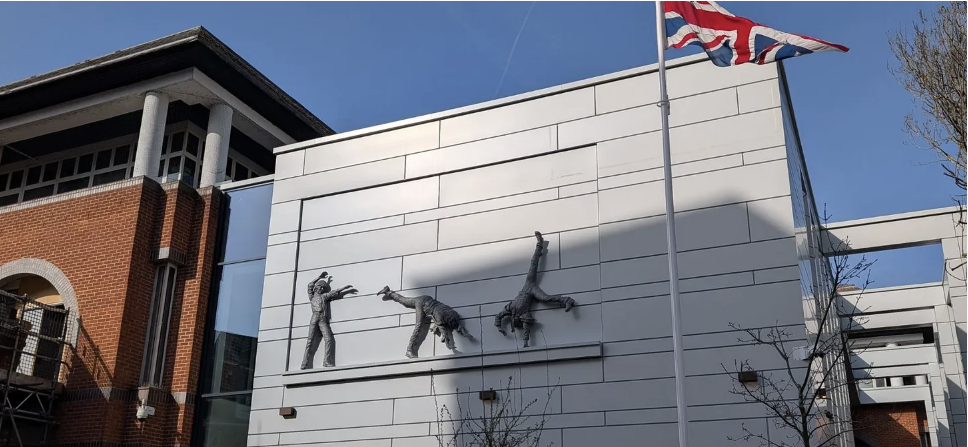
The Cartwheeling Boys sculpture on the outside wall of the Civic Centre, where the council met to debate the budget on Tuesday. Picture: Reading Borough Council
Animal Farm, dog mess and accusations of imperial tyranny – it all came out on a highly-charged night as Reading Council voted through its budget, exposing hard financial realities and political choices that are pushing your council tax ever higher.
After the eye-rolling and the finger-jabbing, clenched teeth and chewed fists, one thing was certain: your council tax is going up again.
Quite why is another matter.
Reading Borough Council met on Tuesday night to vote on its budget for the 2026/27 financial year – and debate inside the chamber reached acrimony. Animal Farm was cited. So was dog poo. There was eloquent polemic, and there was not.
The Green Party – the main opposition – accused the Labour-run council of running a “pay more, get less” budget, saying residents are being hit with above-inflation tax rises while core services are “hollowed out” by spending cuts.
The Conservatives said the council were overspending and under-delivering, extracting more money from residents instead of pursuing meaningful reform.
The Liberal Democrats accused the council of “year after year of overspending”, and recklessly plundering financial reserves to stay afloat.
Reform UK said nothing.
Together, the often contradictory lines of attack felt incoherent. Have the council under-resourced services, as the Greens claim, or overspent, as the Lib Dems and Conservatives argued?
What they mostly agreed on, however, was that Reading Council needed more money. And that is why your council tax is rising again.
The Cartwheeling Boys sculpture on the outside wall of the Civic Centre, where the council met to debate the budget on Tuesday. Picture: Reading Borough Council
A 4.99% increase was voted through – the maximum permitted without a referendum, and the same rise imposed every year since 2023/24.
For a typical Band C household, this means paying around £94 more per year.
“In the middle of a cost-of-living crisis when many residents are already struggling, people will be paying more – this is wrong,” said Cllr Rob White, the Greens’ leader.
But without an aligned critique, the opposition undermined each other’s arguments.
The council leader, Liz Terry (Coley), highlighted that the neighbouring West Berkshire and Windsor & Maidenhead councils were now in dire financial straits, in receipt of Exceptional Financial Support from the government, having chosen not to raise council taxes in previous years.
“I’m not going to take lectures from across the chamber from people who don’t know how to run a council, who don’t know how to make tough choices to make sure that we provide those services most needed,” she said.
“I’ll make no apology for the hard work we’ve done to set a balanced budget next year, and we will balance the budget in future years.”
The opposition did, however, provide reasons why residents might expect the trend of maximum council tax increases will continue.
Conservative leader Raj Singh (Kentwood) drew gasps of astonishment when he said that “there is no difference between Robert Clive (the man who established British rule in India) and this Labour administration.”
Given Clive of India caused the deaths of millions during a brutal, exploitative, imperial reign in the 18th Century, that was overdoing it.
It also distracted from his core argument: that repeatedly squeezing residents for more money risks pushing the system towards collapse.
“Every time, the answer to any financial pressure is to extract more money from residents, until the system itself becomes unsustainable,” he said.
Cllr Singh also turned to Animal Farm, suggesting that Reading’s council feels, in George Orwell’s words, “more equal than others”.
“Because we keep asking residents to pay more while our town stands still, we risk becoming exactly what Orwell warned about: a system where the rules change, and ordinary people are told to accept less while contributing more.”
He concluded: “I do not support a budget that asks residents to carry the weight of rising costs without a credible, radical plan to control them.”
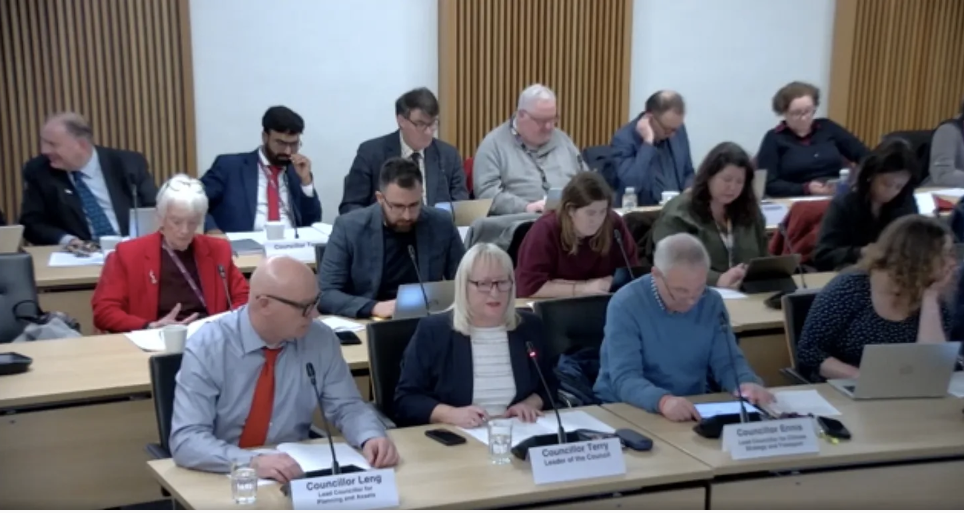
Cllr Liz Terry, the council leader, speaks during the budget debate on Tuesday night. Picture: Reading Borough Council
Liberal Democrat Anne Thompson (Tilehurst), highlighted the reliance on dwindling financial reserves.
“To balance the budget, we will draw down £7.3million from reserves – almost double the drawdown a year ago. The General Fund Revenue Reserve has fallen from £49.8m to a forecast of £30.2m in just one year, a 39% decline. You don’t have to be a mathematical genius to know this can’t go on.”
Budget gaps of nearly £2m in 2027/28 and £207,000 in 2028/29 loom in the council’s Medium Term Financial Strategy.
The evidence of the last few years suggests those gaps will widen. The increasing demand for and cost of adult and children’s social care is placing ever larger stress on council finances across the country. It accounts for more than 70% of Reading Council’s budget. An extra £4.7m for Adult Social Care and £3.8m for Children’s Services was voted through.
Something needs to plug those budget gaps. It is not likely to come from increased central government funding.
Cllr Terry triumphantly announced, to cheers from her backbenchers, that the additional spending power provided by the Labour government to Reading in December has now increased to a headline figure of £44.9m, including £10.5m from central government funding.
The problem is that with headline figures of £45m spending increases comes £45m-worth of increased expectations. Residents tend to think that £45m goes a very long way.
The opposition were united in the belief that the Labour council were not demanding enough from the Labour government – and could no longer blame underfunding of local councils on the austerity policies of previous Conservative governments. The accusation was that this is now Labour austerity.
“It sure feels like austerity to many residents,” said Cllr White. “Public services are being cut. The budget includes £9.6m of so-called efficiencies and savings – most people would call these cuts. Green councillors believe this is a false economy and will cost more in the medium term.”
Cllr Thompson also said some spending cuts – to emergency planning, and on reserves to cope with the impact of potential cyber security breaches – posed a security risk.
“These may be pragmatic cuts to cover essentials elsewhere, but they leave Reading highly vulnerable at the time when rogue individuals and hostile states are becoming ever more sophisticated in their cyber attacks,” she said.
It was just one eyebrow-raising moment among many on one of the most important political nights of the year in Reading.
Cllr Karen Rowland, the lead for Environmental Services and Community Safety, revealed how she had trodden “dog mess” everywhere while highlighting the importance of a “greener, cleaner and safer town”.
Cllr Glen Dennis (Kentwood) gave a robust defence of his visit to Reading’s twin town Dusseldorf during Euro 2024 while in office as Mayor. The opposition all attacked the near £1,000 cost of his flights. He said that he mostly used his own bus pass to travel.
“My term as Mayor demonstrated pride, and a responsible, transparent and value-focused approach to using public funds,” concluded Cllr Dennis. The little shove he gave his laptop after speaking showed his emotion.
Amid the noise, one figure remained silent and inscrutable. He sat quietly at the back of the opposition benches, a hand often covering his mouth, offering no reaction to any of the debate. A dorsal fin was visible above the surface water, but he ignored the bait – a thrown line about climate change denial. He uttered one word all night, when prompted to offer his vote on the budget: “Against.”
“Forgot you were here,” said one cheeky voice on the Labour benches, prompting a few sniggers.
But the threat from Reform UK is no laughing matter for any of these councillors. Cllr Clarence Mitchell (Emmer Green) might have said nothing on the night, but his defection from the Conservatives in January gave Reform their first councillor in Reading – and national polls suggest more will join him after May’s local elections.
Not only is the budget debate important in its own right, it set out the political battleground on which the upcoming election will be fought. On 7 May, one third of Reading’s council seats will be contested.
“The choice is clear,” said Cllr White. “More managed decline under Labour, or the Green Party that will tell the truth, stand up for Reading and demand proper funding for our public services.”
The Greens are also surging in the national polls under Zack Polanski’s leadership, and dealt a blow by winning Thursday’s Gorton and Denton byelection. Labour councillors in Reading face a fight on both the left and right wings.
Cllr Terry hit back, accusing Cllr White of “great fiction” by promising “improved services without fiscal prudence”.
“Better roads, schools, family hubs, recycling – they need to be paid for,” she said. “Luckily the Labour-run council knows how to get things done.”
Reform said nothing. For now.